
Featured collection


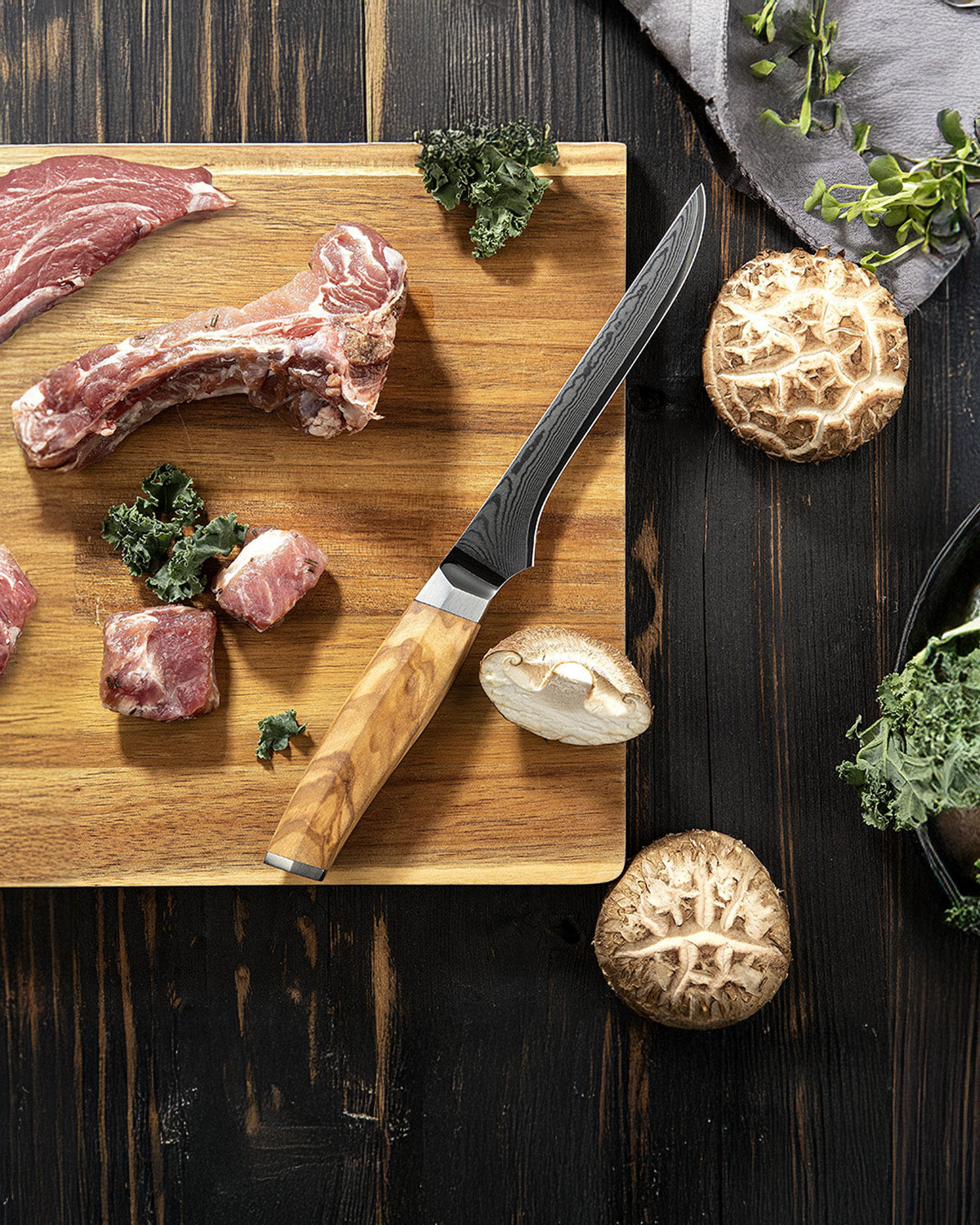
Designed for effortless precision, this Boning Knife is trusted by chefs who demand clean separation and no wasted cuts.
A Butcher’s Secret Weapon


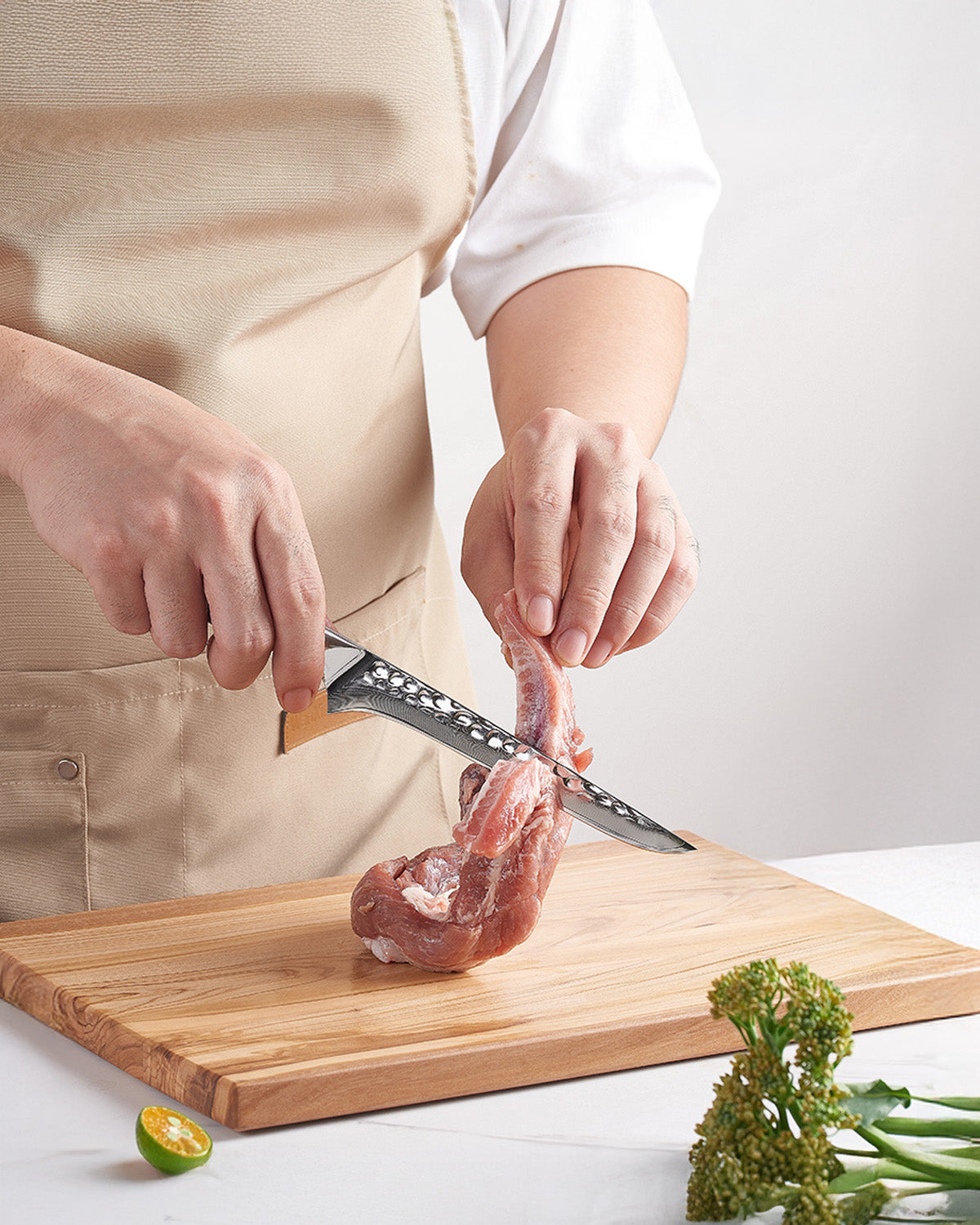
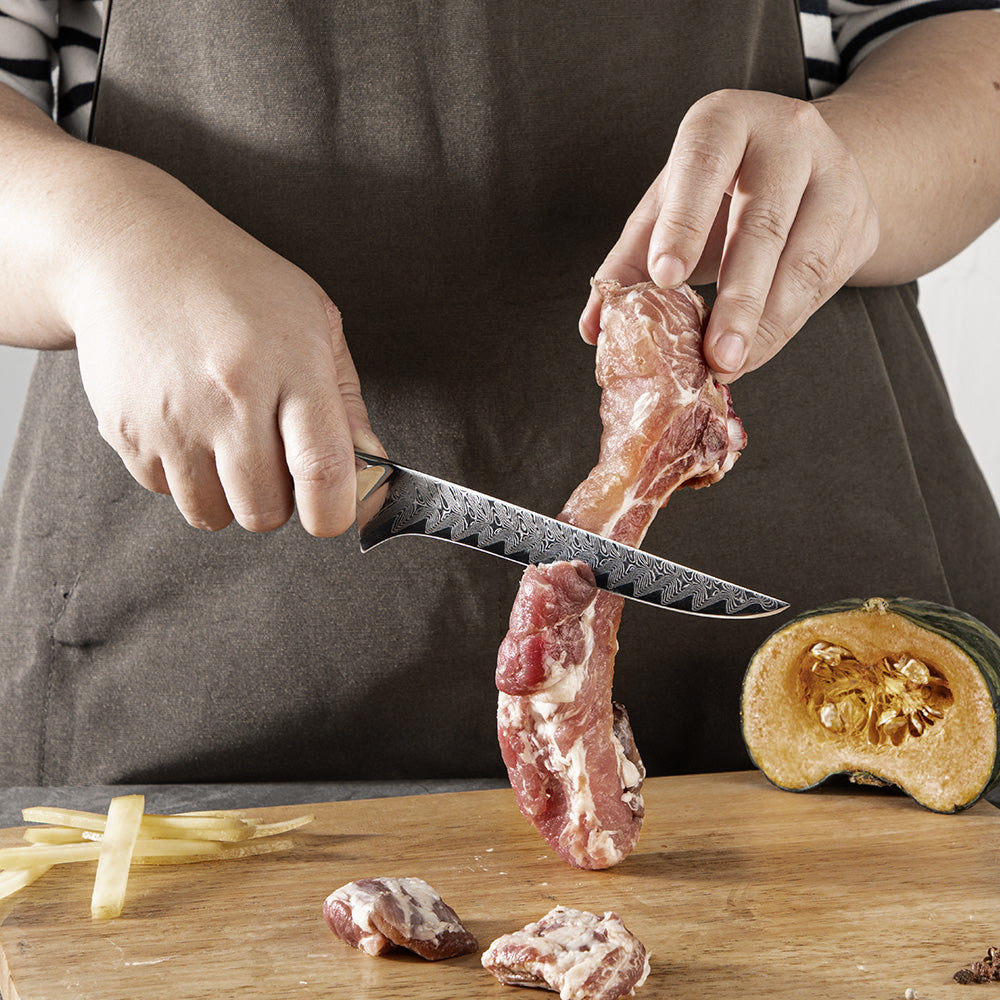
Whether you're removing bones from poultry, fish, or meat, the thin, razor-sharp edge of this Boning Knife slices cleanly through flesh without tearing or bruising. Its flexibility allows close work around joints and bones, preserving texture and minimizing waste.
Need to trim silver skin or unwanted fat from a roast? This Boning Knife gives you the finesse you need for delicate work and the strength to power through tougher areas. Perfect for those who take their butchery seriously.
This Boning Knife doubles as a capable fish fillet tool, gliding under skin and over bone with fluid motion. Whether you’re prepping sea bass or trout, expect consistent, clean results every time.


Flexible 67-Layer Damascus Blade
Maneuvers easily around joints and cartilage for surgical trimming.
Ultra-Sharp Edge
67-layer Damascus construction deliver an edge that glides effortlessly through vegetables, meats, and herbs.
Ergonomic Full Tang Handle
Non-slip grip provides full control even with wet or greasy hands.
Rust-Resistant
High-carbon steel resists corrosion even after working with raw meat.
This boning knife completely changed the game for me. I regularly break down whole chickens at home, and since switching to this knife, my cuts are noticeably cleaner with far less waste.
The flexibility and sharpness are insane. I’ve never felt more in control when deboning lamb or even salmon.
This knife glides through fat and gristle like butter. Super easy to handle and looks amazing too.

The Knife That Knows Its Way Around the Bone
For chefs and butchers alike, the Boning Knife is the unsung hero of the prep table. Its curved, flexible blade allows for precision work in tight areas — helping you remove bones, skin, or sinew with minimal effort and maximum yield. With a 67-layer Damascus build and ergonomic handle, it's a seamless extension of your skill in the kitchen.
Premium Damascus Steel Boning Knives - Master Every Cut
Experience surgical precision with Damascus steel boning knives engineered for flawless deboning. Our handcrafted blades combine razor-sharp edges with flexible control, transforming complex butchery into effortless artistry. Whether you're deboning chicken, trimming beef, or filleting fish, discover the professional-grade tool that delivers cleaner cuts, higher yields, and masterful results every time.
Why a Dedicated Boning Knife is Essential
A boning knife isn't just another blade it's a precision instrument that transforms how you work with meat, poultry, and fish. While a chef's knife excels at general kitchen tasks, its thick blade crushes delicate meat fibers and wastes valuable product when working around bones. Many home cooks struggle with damaged cuts, excessive waste, and safety concerns when using the wrong tool for deboning.
At FYN Damascus Knives, we've engineered boning knives that solve these challenges through authentic Damascus steel construction. Our blades feature narrow profiles and pointed tips that glide effortlessly around bones and through connective tissue, delivering the precise control needed for intricate butchery work. The layered steel construction provides superior sharpness that stays keen through extended deboning sessions, while the perfectly balanced flexibility allows you to follow bone contours without applying excessive force. Each cut becomes cleaner, safer, and more efficient maximizing your yield while minimizing effort and frustration.
What is a Boning Knife?
A boning knife is a specialized culinary tool designed specifically for removing bones from meat, poultry, and fish with surgical precision. Unlike general purpose kitchen knives, boning knives feature narrow blades typically measuring 5 to 7 inches in length, characterized by their thin profile, sharp pointed tip, and varying degrees of flexibility that allow them to navigate the complex contours of bones and joints.
The boning knife has served as an essential tool in professional kitchens and butchery for generations, where skilled craftsmen rely on its unique design to maximize yield and minimize waste. The blade's thin profile allows it to slip between meat and bone with minimal resistance, while the pointed tip provides the precision needed for detailed work around joints and cartilage. Depending on the intended use, boning knives offer different flexibility levels from rigid blades that provide leverage when working with tough connective tissue to flexible blades that bend to follow bone contours in poultry and fish.
The primary applications of a boning knife include deboning chicken thighs and breasts, trimming beef roasts and pork shoulders, filleting fish, removing silverskin from tenderloins, and separating meat from cartilage in joints. The knife's design allows you to make precise cuts that follow the natural anatomy of the protein, resulting in cleaner separation, better presentation, and significantly less wasted meat compared to using a thicker chef's knife or utility knife.
What sets a quality boning knife apart is its ability to maintain sharpness through repetitive cutting while providing the control needed for intricate work. The blade must be strong enough to handle tough connective tissue yet flexible enough to maneuver around bones without breaking. This delicate balance of characteristics makes the boning knife indispensable for anyone who regularly works with whole proteins, from professional butchers and chefs to home cooks seeking to save money by breaking down whole chickens or preparing fresh caught fish.
Boning Knife vs. Fillet Knife: Understanding the Difference
Many people confuse boning knives and fillet knives, and while they share similarities, understanding their differences helps you choose the right tool for your needs.
Boning Knife Characteristics: Boning knives feature slightly thicker, more rigid blade construction designed specifically for removing bones from beef, pork, poultry, and game. The blade provides enough stiffness to work through tougher connective tissue and cartilage while maintaining the flexibility needed to navigate around bones. This sturdier construction allows you to apply controlled force when separating joints or working through thick silverskin, making it ideal for deboning chicken thighs, trimming beef roasts, breaking down pork shoulders, and processing game meats. The versatile design handles a wide range of proteins effectively.
Fillet Knife Characteristics: Fillet knives utilize thinner, significantly more flexible blades specifically engineered for fish and delicate seafood preparation. The extreme flexibility allows the blade to glide along bones and skin with minimal pressure, following the natural contours of fish anatomy. This specialized design excels at removing pin bones, creating clean fillets, and skinning fish, but the thin, flexible blade lacks the structural support needed for tougher meats or working through joints and cartilage.
The Key Takeaway: While both knives share the goal of separating meat from bone, boning knives offer superior versatility for various meats and proteins, making them the better choice for home cooks who work with diverse ingredients. Fillet knives specialize exclusively in fish preparation. The good news? Quality Damascus boning knives from FYN, particularly those with semi flexible blades, can handle both meat and fish applications with proper technique giving you professional results across all your butchery needs without requiring multiple specialized tools.
Why Damascus Steel Boning Knives?
Surgical Precision & Sharpness
Damascus steel boning knives feature a meticulously layered construction created by forging multiple layers of high carbon steel together, producing an exceptionally sharp edge that cuts with surgical precision. Our blades are sharpened to a 15 degree angle significantly keener than the 25 degree angle found on standard Western knives allowing them to glide through connective tissue without tearing delicate meat fibers. This superior sharpness translates directly to cleaner cuts that preserve the integrity of your proteins, minimize waste by allowing closer cuts to the bone, and result in better presentation and higher yields. When you're deboning expensive cuts of meat or preparing multiple proteins for meal prep, this precision saves money and delivers professional quality results.
Superior Edge Retention
The multiple layers of high carbon steel in Damascus construction maintain their razor sharp edge significantly longer than conventional stainless steel blades. This exceptional edge retention means less frequent sharpening required, even with regular use a Damascus boning knife can stay sharp through extended deboning sessions that would dull standard knives multiple times. For home cooks, this means reliable performance whenever you need it. For professionals processing high volumes daily, it means consistent results and less downtime for maintenance. The superior edge retention of Damascus steel makes every deboning task more efficient and enjoyable.
Enhanced Flexibility & Control
The layered construction of Damascus steel provides an optimal balance of flexibility and strength that's particularly crucial for boning knife applications. The blade bends to follow bone contours without risk of breaking or permanent deformation, allowing you to make precise cuts in tight spaces around joints where rigid blades would struggle. This controlled flexibility lets you apply the right amount of pressure for each specific cut firm when trimming tough silverskin, gentle when working around delicate breast meat. The result is superior control that makes complex deboning tasks feel natural and intuitive, even for home cooks still developing their technique.
Exceptional Durability
High carbon Damascus steel construction resists chipping and breaking even when subjected to the rigors of daily professional use. The layered structure distributes stress across multiple steel layers, maintaining structural integrity when working through tough cartilage or navigating unexpected bone fragments. This durability means your investment performs reliably for decades with proper care, eliminating the frustration and expense of repeatedly replacing inferior knives that chip, bend, or lose their edge prematurely. Whether you're a weekend warrior breaking down whole chickens or a professional butcher processing hundreds of pounds weekly, Damascus steel delivers the lasting performance you demand.
Unmatched Aesthetics
Beyond exceptional performance, Damascus steel creates a distinctive wavy pattern that makes each boning knife a unique work of functional art. The flowing lines and contrasting layers aren't merely decorative they're visual proof of authentic craftsmanship and quality construction. Your Damascus boning knife becomes a conversation piece that reflects your commitment to culinary excellence, while the stunning pattern serves as a daily reminder that you're working with a tool built to the highest standards. It's a knife that performs as beautifully as it looks, combining form and function in perfect harmony.
Ergonomic Balance & Comfort
Our Damascus boning knives feature full tang construction that provides optimal weight distribution for extended use without hand fatigue. The carefully engineered balance point allows for precise control during intricate deboning work, whether you're making delicate cuts around chicken wing joints or applying firm pressure to separate tough connective tissue. The ergonomic design enhances both safety and precision a well balanced knife requires less force to control, reducing the risk of slips and improving the accuracy of every cut. This comfort advantage becomes especially noticeable during longer butchery sessions or when processing multiple proteins.
Versatility Beyond Deboning
While engineered specifically for deboning, Damascus steel boning knives prove remarkably versatile across numerous kitchen applications. The narrow, sharp blade excels at trimming fat and silverskin from tenderloins, butterflying chicken breasts and pork chops for even cooking, breaking down whole fish from market to plate, detailed vegetable work like coring peppers or peeling tough skinned produce, and countless other intricate butchery tasks. This versatility means you'll reach for your Damascus boning knife far more frequently than you might expect, making it one of the hardest working tools in your kitchen arsenal.
Types of Boning Knives & Flexibility Guide
Understanding the different flexibility levels and styles helps you select the perfect boning knife for your specific needs.
Stiff/Rigid Boning Knives deliver minimal flex and maximum control, making them ideal for beef, pork, lamb, and larger cuts of meat. The rigid blade provides the leverage needed when working through tough connective tissue, removing thick silverskin from beef tenderloins, or breaking down whole beef primals. Butchers, BBQ enthusiasts, and hunters processing game meats appreciate the controlled force and precision that stiff blades provide when tackling substantial cuts.
Semi Flexible Boning Knives represent the versatile middle ground, offering moderate flex that handles all purpose deboning across multiple protein types. This balanced design excels at deboning chicken, trimming pork chops, breaking down whole poultry, and general kitchen prep work. For home cooks and professional chefs who work with diverse ingredients, a semi flexible blade around 6 inches long provides the most versatile performance handling everything from delicate poultry to tougher red meats with equal competence.
Flexible Boning Knives feature significant blade flex that follows bone contours effortlessly, specifically designed for poultry, fish, and delicate deboning work. The flexibility allows the blade to bend around ribcages and navigate complex bone structures in chicken breasts, whole fish, and similar applications. Those who frequently work with poultry and fish find flexible blades make these tasks significantly easier and more efficient.
Japanese Style (Honesuki) knives offer a unique triangular blade design with a rigid spine that provides exceptional control for poultry butchery. The distinctive shape and rigidity excel at breaking down whole chickens, removing cartilage with precision, and detailed knife work that demands absolute control. Culinary enthusiasts and those who appreciate Japanese knife traditions value the honesuki for its specialized capabilities.
Blade Length Considerations: 5 6 inch blades suit detailed work, smaller cuts, and poultry preparation where maneuverability matters most. The 6 7 inch range represents the most versatile all purpose length, popular among both home cooks and professionals for its balance of control and reach. Blades measuring 7 inches or longer provide the extended reach needed for larger cuts, professional butchery applications, and whole fish preparation.
How to Choose Your Perfect Boning Knife
Selecting the ideal boning knife requires understanding how different characteristics align with your specific needs and cooking style.
Consider Your Primary Use: If you mostly work with beef and pork, choose a stiffer blade measuring 6 7 inches that provides the leverage and control needed for tougher connective tissue. Those who primarily debone poultry should opt for a semi flexible to flexible blade in the 5 6 inch range that navigates around bones effortlessly. Fish enthusiasts benefit from more flexible blades at 6 7 inches that follow contours smoothly. For mixed use across various proteins, a semi flexible 6 inch blade offers the most versatile performance, handling everything from whole chickens to beef roasts with professional results.
Blade Flexibility: Understanding blade flex proves crucial for optimal performance. Stiffer blades offer superior control and leverage when working through tough joints and thick silverskin, while flexible blades follow bone contours more easily in poultry and fish. Test the blade flex before purchasing if possible, or carefully research the flexibility level. Many serious cooks find value in having both a semi flexible all purpose knife and a specialized blade for their most frequent tasks the investment pays dividends in efficiency and results.
Handle Comfort & Grip: A secure grip becomes essential when working with slippery meat and applying varying levels of force. Look for ergonomic designs that fit comfortably in your hand size, with materials that resist moisture even when wet G10, Pakkawood, and stabilized wood all provide excellent grip and durability. Full tang construction ensures better balance and longevity, creating a knife that feels like a natural extension of your hand rather than a separate tool you're fighting to control.
Steel Quality & Composition: The number of Damascus steel layers impacts both performance and aesthetics more layers generally correlate with better edge retention and more striking visual patterns. Look for knives featuring VG 10 or similar high carbon steel cores that provide the foundation for exceptional sharpness. Rockwell hardness between 58 62 HRC represents the ideal range for boning knives, offering the perfect balance of edge retention and the slight flexibility needed for deboning work. Corrosion resistance becomes particularly important if you frequently work with fish or poultry, where acidic juices and moisture contact is inevitable.
Your Skill Level: Beginners should start with a semi flexible, mid length blade around 6 inches that provides forgiving performance while building confidence and technique. Intermediate cooks can experiment with different flexibility levels for specific tasks, expanding their knife skills and understanding of how blade characteristics affect performance. Professional butchers and experienced home cooks may want specialized knives optimized for their most frequent applications. The beauty of Damascus steel is that it benefits all skill levels the superior sharpness makes cutting easier and safer regardless of experience, requiring less force and providing better control that helps beginners develop proper technique more quickly.
Budget Considerations: View a quality boning knife as an investment rather than an expense. Damascus steel offers superior longevity that translates to better long term value compared to repeatedly replacing cheaper knives. Professional grade tools improve both your results and safety a sharp, well balanced knife requires less force and provides better control, reducing injury risk significantly. One quality Damascus boning knife outlasts multiple cheap replacements while delivering consistently superior performance that improves your cooking outcomes. The precision, efficiency, and enjoyment you gain from using the right tool justifies the premium investment many times over.
How to Use a Boning Knife: Techniques & Tips
Mastering proper boning knife techniques ensures safe, efficient deboning with professional quality results.
Proper Grip Techniques: The standard handle grip involves wrapping all fingers firmly around the handle, providing stability and control for general deboning tasks. For maximum precision work, use the pinch grip pinching the blade between your thumb and forefinger just ahead of the handle while wrapping remaining fingers around the handle base. This grip offers superior control for detailed cuts around joints and when following bone contours closely. Switch between grips based on the specific task: use the handle grip for broader strokes and the pinch grip when precision matters most.
Deboning Chicken Step by Step: Start with a whole bird positioned breast side up on your cutting board. Use the pointed tip to locate joints by feeling for the natural separations between bones. Make your initial cut along the breastbone, then follow the ribcage downward using short, controlled strokes. Let the knife do the work rather than forcing cuts the sharp Damascus blade requires minimal pressure. Angle your blade slightly toward the bone to maximize meat yield, keeping the edge as close to the bone structure as possible. With practice, you'll develop a rhythm that makes deboning feel natural and intuitive.
Removing Silverskin from Beef and Pork: Insert the tip of your boning knife under the edge of the silverskin, creating a small tab to grip. Angle the blade slightly upward, away from the meat, and use long, smooth strokes to separate the silverskin. Keep the blade as close to the silverskin as possible to avoid removing valuable meat. Maintain consistent blade angle throughout each stroke for even, clean removal. This technique works equally well on beef tenderloins, pork tenderloins, and any cut requiring silverskin removal.
Safety Guidelines: Always cut away from your body and keep your non knife hand clear of the cutting path position it behind the blade rather than in front. Use a stable cutting board that won't slip during use, and maintain a sharp blade at all times. Counterintuitively, dull blades are far more dangerous because they require excessive force and are more likely to slip. Take your time, especially when learning precision matters far more than speed. Clean and dry your knife immediately after use to maintain its condition and prevent accidents from slippery handles.
Pro Tips for Best Results: Allow meat to come to room temperature for about 20 30 minutes before deboning cold meat is harder to cut cleanly and makes it more difficult to feel joint locations. Use smooth, confident strokes rather than sawing motions, which tear meat fibers and create ragged cuts. Keep your blade angle consistent throughout each cut for even results. Follow the natural contours and anatomy of bones rather than fighting against them the bone structure guides your cutting path. Practice on affordable whole chickens before attempting expensive cuts like beef tenderloin the investment in practice pays off quickly in improved technique and reduced waste.
Care & Maintenance for Damascus Boning Knives
Proper care ensures your Damascus boning knife delivers peak performance for decades while maintaining its stunning appearance.
Daily Cleaning: Hand wash your knife immediately after each use with warm water and mild dish soap never delay cleaning when working with proteins. Thoroughly remove all protein residue, which can cause corrosion if left on the blade. Never put your Damascus steel boning knife in the dishwasher, as harsh detergents, high heat, and water pressure can damage the Damascus pattern, compromise handle materials, and dull the edge. Dry completely with a soft cloth immediately after washing, paying special attention to the area where the blade meets the handle where moisture can accumulate. Avoid leaving your knife wet or soaking in water, which invites rust and handle damage.
Proper Storage: Store your boning knife in a knife block, on a magnetic knife holder, or protected with a blade guard to protect the delicate edge and prevent accidents. Avoid loose drawer storage where the blade can contact other utensils, causing damage and dulling. Ensure proper ventilation in your storage location to prevent moisture buildup, and keep the blade completely dry before storing. Proper storage protects both your investment and your family's safety.
Sharpening & Honing: Hone your boning knife with a steel rod before each use to maintain proper edge alignment this realigns the microscopic edge without removing material. When you notice decreased cutting performance, sharpen on a whetstone using a 1000 grit stone for regular maintenance and 3000 6000 grit for final polishing. Maintain a consistent 15 degree angle for Damascus blades, working evenly on both sides. The superior edge retention of Damascus steel means less frequent sharpening compared to conventional knives typically every 2 4 weeks with regular home use. Consider professional sharpening service 1 2 times per year to restore factory sharp perfection and ensure optimal performance.
What to Avoid: Never cut through large bones or attempt to chop frozen meat with your boning knife these tasks can chip or break the blade. Avoid twisting or prying motions that stress the blade laterally. Don't use your knife on hard surfaces like glass, ceramic, or stone cutting boards invest in wood or quality plastic boards that protect your edge. Avoid leaving acidic foods sitting on the blade for extended periods, and never leave your knife in the sink or dishwasher where it can be damaged or cause injury.
Maintaining Damascus Pattern Beauty: Occasionally oil your blade with food safe mineral oil to enhance the Damascus pattern and provide moisture protection. Wipe down after cleaning to prevent water spots from dulling the pattern's appearance. Use gentle, non abrasive cleaning cloths that won't scratch the finish. Remember that the Damascus pattern will naturally develop character and patina over time this aging process adds to the knife's unique beauty and story while in no way diminishing performance.
Why Choose FYN Damascus Boning Knives
At FYN Damascus Knives, we combine master craftsmanship with premium materials to create boning knives that deliver professional results for demanding applications.
Every knife in our collection features a VG 10 high carbon steel core wrapped in 67 layers of Damascus steel, creating blades with exceptional edge retention, superior corrosion resistance, and stunning visual beauty. Our artisans employ traditional forging techniques passed down through generations, ensuring each boning knife meets exacting standards for sharpness, balance, and durability.
Each blade is hand sharpened to a precise 15 degree edge angle, significantly keener than standard Western knives, and heat treated to 60±2 Rockwell hardness for optimal performance. Our ergonomic handle designs provide comfortable, secure grip even during extended deboning sessions, while full tang construction ensures superior balance and lasting durability. Before any knife reaches your kitchen, it undergoes rigorous quality inspection to verify proper heat treatment, edge geometry, and finish quality.
We stand behind our products with a customer satisfaction guarantee and responsive support throughout the USA. Whether you're a professional chef processing high volumes daily or a home cook seeking to master whole chicken breakdown and meat preparation, FYN Damascus Knives provides professional grade tools that transform challenging butchery tasks into confident, efficient craftsmanship. Your investment in our boning knives represents a commitment to quality that will serve you faithfully for decades.
Real World Applications
Our Damascus boning knives excel across diverse cooking scenarios and skill levels.
The Weekend BBQ Master relies on Damascus precision to trim brisket perfectly, remove membrane from ribs for better smoke penetration, and butterfly chicken for even grilling. The controlled flex navigates around bones while the sharp edge slices through silverskin effortlessly, ensuring competition quality results every weekend.
The Home Chef saves money by breaking down whole chickens into individual pieces, removes pin bones from salmon fillets for restaurant quality presentation, and trims pork tenderloin to perfection. The Damascus boning knife transforms challenging butchery from intimidating to enjoyable, building confidence and skills with each use.
The Hunter processes game efficiently in the field or at home, deboning venison with minimal waste, and preparing wild turkey and other game birds. The durable Damascus construction withstands the demands of field processing while maintaining the sharp edge needed for clean, precise cuts that preserve meat quality.
The Meal Prep Enthusiast portions chicken breasts into uniform sizes for consistent cooking, removes excess fat for healthier meals, and creates uniform cuts that cook evenly. The reliable sharpness and comfortable grip make processing multiple proteins for the week efficient and enjoyable rather than tedious.
The Fish Enthusiast fillets fresh catch with surgical precision, removes skin cleanly without wasting meat, and prepares whole fish from market to plate. The semi flexible Damascus blade handles delicate fish anatomy while maintaining the structure needed for larger species.
The Professional Chef depends on Damascus edge retention through high volume deboning, achieves consistent results that meet exacting standards, and trusts their reliable daily workhorse to perform flawlessly during demanding service. The reduced sharpening frequency and exceptional control make Damascus boning knives indispensable in professional kitchens.
Experience Precision: Shop FYN Damascus Boning Knives
Transform your meat preparation with a Damascus steel boning knife engineered for surgical precision and lasting performance. Every deboning task becomes faster, cleaner, and more efficient from breaking down whole chickens to trimming premium beef. Experience the confidence that comes from working with professional grade tools that deliver flawless results. Explore our collection of Damascus boning knives and discover why chefs and home cooks choose FYN for precision that performs beautifully for generations. Shop now with fast USA shipping, exceptional customer support, and our satisfaction guarantee. Your mastery begins here.
FAQ
What is a Boning Knife used for?
It’s primarily used to separate meat from bone, trim fat, and remove skin from cuts of meat or fish.
Can I engrave or personalize it?
Yes — we offer custom engraving to make your Boning Knife unique or gift-ready.
Do you offer international shipping?
Yes, we ship internationally. Shipping times and rates vary depending on your location. Please refer to our shipping policy or contact us for more details.
Any Other Question?
We're here to help! If you have any questions not answered here, please contact our support team — we’ll get back to you promptly.