

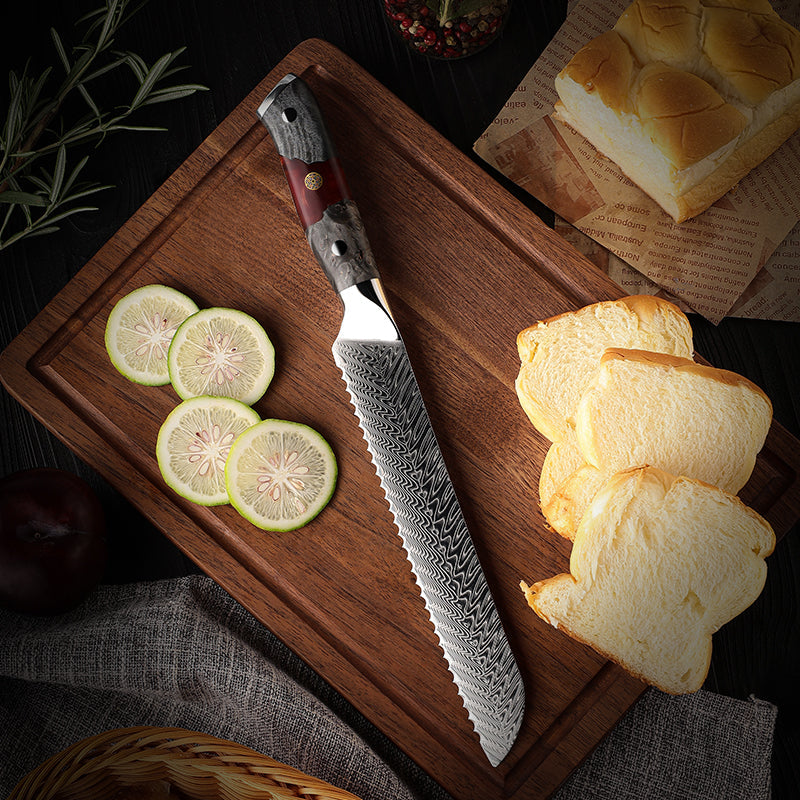
If you've ever struggled to slice through a crusty baguette without crushing it or tried to cut a tomato only to squash it instead, you know the frustration of using the wrong knife. That's where a bread knife comes in a kitchen essential that often doesn't get the recognition it deserves.
In this comprehensive guide, we'll cover everything you need to know about bread knives: what they are, what they look like, how to use them effectively, and most importantly, how to keep them sharp for years to come.
What Is a Bread Knife?
A bread knife is a specialized kitchen knife designed with a long, serrated blade that makes it perfect for slicing through foods with tough exteriors and soft interiors. Unlike chef's knives or paring knives with smooth edges, bread knives feature a series of pointed teeth along the blade that work like a saw.
The typical bread knife has a blade length ranging from 7 to 10 inches (18 to 25 cm), though professional-grade versions can extend up to 14 inches. This extended length allows you to slice through large loaves of bread in smooth, continuous strokes without applying excessive downward pressure.
What Does a Bread Knife Look Like?
Identifying a bread knife is straightforward once you know what to look for. Here are the key visual characteristics:
Blade Design:
- Long, narrow blade (typically 8-10 inches)
- Pronounced serrated edge with pointed or scalloped teeth
- Slight curve or straight blade profile
- Usually thinner than a chef's knife
Handle:
- Comfortable, ergonomic grip
- Often offset slightly to provide knuckle clearance
- Made from wood, plastic, or composite materials
Overall Appearance: The serrations are the most distinctive feature—they resemble a miniature saw blade with evenly spaced teeth running along the entire cutting edge. Some bread knives have pointed teeth, while others feature scalloped or wavy serrations.
What Is a Bread Knife Used For?
Despite its name, a bread knife is incredibly versatile. Here's what you can use it for:
Primary Uses:
1. Slicing Bread Obviously its main purpose! A bread knife effortlessly cuts through:
- Crusty artisan loaves
- Soft sandwich bread
- Bagels and rolls
- Baguettes and ciabatta
2. Cutting Cakes and Pastries The serrated edge prevents delicate baked goods from compressing:
- Layer cakes
- Angel food cake
- Croissants
- Danish pastries
3. Slicing Tomatoes The saw-like action penetrates tough tomato skin without squashing the fruit:
- Large beefsteak tomatoes
- Heirloom varieties
- Cherry tomatoes (use carefully)
Additional Uses:
4. Cutting Melons and Large Fruits
- Watermelons
- Pineapples
- Cantaloupe
5. Slicing Delicate Items
- Cheesecakes
- Brownies and bar cookies
- Sushi rolls
6. Carving Roasts Some cooks prefer bread knives for carving because the serrations grip the meat and create clean slices.
The key advantage of a bread knife is that it requires minimal downward pressure. The serrated edge does the work through a gentle sawing motion, which prevents crushing or tearing delicate foods.
How to Use a Bread Knife Properly
Using a bread knife correctly will give you cleaner cuts and extend the life of your blade. Here's how:
Basic Technique:
Step 1: Position Your Food Place the item on a stable cutting board. For round items like bread loaves, ensure they won't roll.
Step 2: Use a Sawing Motion Unlike a chef's knife where you rock the blade, use a gentle back-and-forth sawing motion with your bread knife. Let the serrations do the work—don't apply heavy downward pressure.
Step 3: Start with the Tip Begin your cut using the front third of the blade, then draw the knife back and forth through the entire length of the blade.
Step 4: Keep It Level Maintain a horizontal angle to create even slices. Tilting the knife will result in wedge-shaped pieces.
Step 5: Use Long Strokes Take advantage of the knife's full length. Longer strokes are more efficient and create cleaner cuts than short, choppy motions.
Pro Tips:
- Turn crusty bread upside down before slicing to prevent the top crust from cracking
- For layer cakes, chill them first for cleaner cuts
- Clean the blade between cuts when slicing sticky items
- Never use a bread knife on a glass or ceramic cutting board—it will dull the serrations
How to Sharpen a Serrated Bread Knife
Here's where things get interesting. Many people assume serrated knives can't be sharpened, but that's a myth. While it's more challenging than sharpening a straight-edge knife, it's absolutely possible to restore your bread knife's cutting power.
Why Sharpening Serrated Knives Is Different
The serrated edge consists of multiple pointed teeth with beveled edges. Each tooth must be sharpened individually, and the bevel is typically only on one side of the blade (usually the right side for right-handed knives).
Method 1: How to Sharpen a Serrated Bread Knife at Home with a Rod
This is the most common method for home sharpening.
What You'll Need:
- Tapered sharpening rod (ceramic or diamond-coated)
- Clean cloth
- Cutting board or towel for stability
Step-by-Step Process:
- Identify the Beveled Side Run your finger along both sides of the blade. The side with the bevel will feel like it slopes into the serrations. This is the side you'll sharpen.
- Select the Right Rod Diameter Match the rod diameter to the size of your serrations. The rod should fit comfortably into the gullet (the curved part between teeth).
- Position the Knife Hold the knife firmly with the serrated side facing you. You can clamp it in a vise or hold it steady against a cutting board.
-
Sharpen Each Serration
- Insert the rod into one serration at the beveled edge
- Match the existing bevel angle (usually 15-20 degrees)
- Make 3-5 smooth strokes, pushing away from you
- Move to the next serration and repeat
- Remove the Burr After sharpening all serrations, a slight burr will form on the flat (non-beveled) side. Gently run the flat side across a fine sharpening stone or leather strop to remove it.
- Test the Edge Try slicing a tomato or piece of paper. If it cuts cleanly, you're done!
Method 2: How to Sharpen a Bread Knife with a Steel
While a standard honing steel won't effectively sharpen serrations, you can use a tapered ceramic or diamond steel.
Process:
- Hold the knife at a 20-degree angle against the steel
- Draw the steel through each serration from heel to tip
- Use light pressure and consistent strokes
- Work through all serrations systematically
- Finish by removing the burr from the flat side
Method 3: How to Sharpen a Serrated Bread Knife with a Sharpening Tool
Several specialized tools are designed for serrated knives:
DMT Diafold Serrated Knife Sharpener - Diamond-coated tapered rod with handle Spyderco Sharpmaker - Triangular ceramic rods at fixed angles Work Sharp Knife Sharpener - Electric sharpener with serrated knife attachment
These tools simplify the process and help maintain consistent angles.
Brand-Specific: How to Sharpen a Wusthof Bread Knife
Wusthof bread knives feature precise, scalloped serrations. Here's the approach:
- Use a tapered ceramic rod specifically designed for scalloped edges
- Wusthof recommends a 14-degree angle for their blades
- Work gently—Wusthof steel is high-quality and doesn't require aggressive sharpening
- Consider professional sharpening services if you're uncomfortable doing it yourself
- Wusthof offers a blade resharpening service for their knives
How Often Should You Sharpen Your Bread Knife?
Unlike straight-edge knives that need regular honing, bread knives can go years between sharpenings if properly cared for. Signs your bread knife needs sharpening:
- It crushes bread instead of slicing cleanly
- You need to apply significant pressure
- The knife tears tomato skin instead of cutting through
- It's been 3-5 years since the last sharpening
When to Seek Professional Sharpening
If you're uncomfortable sharpening serrated knives yourself, professional knife sharpening services can handle the job. This is particularly advisable for:
- High-end Damascus steel bread knives
- Knives with complex serration patterns
- When you lack the proper tools
- If you've never sharpened a serrated knife before
What Is the Best Bread Knife?
While personal preference plays a role, here are key features to look for in a quality bread knife:
Essential Features:
1. Blade Length
- 8-10 inches is ideal for home use
- Longer blades (10-14 inches) for professional kitchens or large loaves
2. Serration Style
- Pointed serrations: More aggressive cutting, better for very crusty bread
- Scalloped serrations: Gentler cutting, better for cakes and delicate items
- Offset serrations: Combines benefits of both styles
3. Blade Material
- High-carbon stainless steel: Excellent edge retention and rust resistance
- Damascus steel: Beautiful patterns, exceptional sharpness, premium option
- Ceramic: Stays sharp longer but more brittle
4. Handle Comfort
- Ergonomic design for extended use
- Good balance between blade and handle
- Non-slip grip material
5. Full Tang Construction The blade should extend through the entire handle for durability and balance.
Top-Tier Options:
For those seeking premium quality, Damascus steel bread knives offer:
- Exceptional edge retention
- Stunning visual aesthetics
- Superior cutting performance
- Heirloom quality that lasts generations
At Fyn Damascus Knives, we specialize in handcrafted Damascus steel bread knives that combine traditional Japanese craftsmanship with modern ergonomics.
Caring for Your Bread Knife
Proper maintenance extends your knife's lifespan significantly:
Daily Care:
1. Hand Wash Only Never put bread knives in the dishwasher. The harsh detergents and high heat damage both the blade and handle.
2. Dry Immediately Prevent rust and water spots by drying your knife right after washing.
3. Proper Storage
- Use a knife block with the serrations facing up
- Store in a protective sheath
- Hang on a magnetic knife strip
- Never toss loose in a drawer where serrations can bang against other utensils
4. Use Appropriate Cutting Boards
- Wood or bamboo: Best choice, gentle on serrations
- Plastic: Acceptable option
- Glass or ceramic: Avoid—will damage serrations
Long-Term Maintenance:
- Oil the blade occasionally if it's carbon steel
- Check handle attachment and tighten if needed
- Inspect serrations regularly for damage
- Professional sharpening every 3-5 years
Understanding Bread Knife Mechanics: Which Class Lever?
For those curious about the physics, a bread knife functions as a third-class lever. In this system:
- The fulcrum is at the handle (where you grip)
- The effort is applied by your hand
- The load (resistance) is at the cutting edge
This lever configuration provides precise control and maneuverability, which is why the sawing motion feels natural and requires less force than pushing straight down.
Common Bread Knife Mistakes to Avoid
1. Using a Sawing Motion on a Cutting Board Don't saw against the board—you'll dull the serrations quickly.
2. Applying Excessive Pressure Let the serrations do the work. Heavy pressure damages both the knife and your food.
3. Using It as a General-Purpose Knife Bread knives aren't ideal for chopping vegetables or slicing meat (except for carving in some cases).
4. Neglecting Maintenance Even though bread knives need less frequent sharpening, they still require proper care and cleaning.
5. Storing Improperly Letting the blade bang against other utensils will chip the serrations.
Conclusion
A bread knife is far more than a single-purpose tool—it's a versatile kitchen essential that deserves a place in every cook's arsenal. Whether you're slicing homemade sourdough, cutting a birthday cake, or preparing tomatoes for a salad, a quality bread knife makes the job easier and more enjoyable.
By understanding what a bread knife is, how to use it properly, and how to maintain its serrated edge, you'll get years of reliable performance from this invaluable tool. And if you're in the market for a premium bread knife that combines exceptional functionality with stunning aesthetics, consider investing in a Damascus steel blade that will serve you for a lifetime.
Ready to upgrade your kitchen with a premium Damascus steel bread knife? Visit Fyn Damascus Knives to explore our handcrafted collection of professional-grade serrated knives that combine traditional craftsmanship with modern performance.

Leave a comment
This site is protected by hCaptcha and the hCaptcha Privacy Policy and Terms of Service apply.