

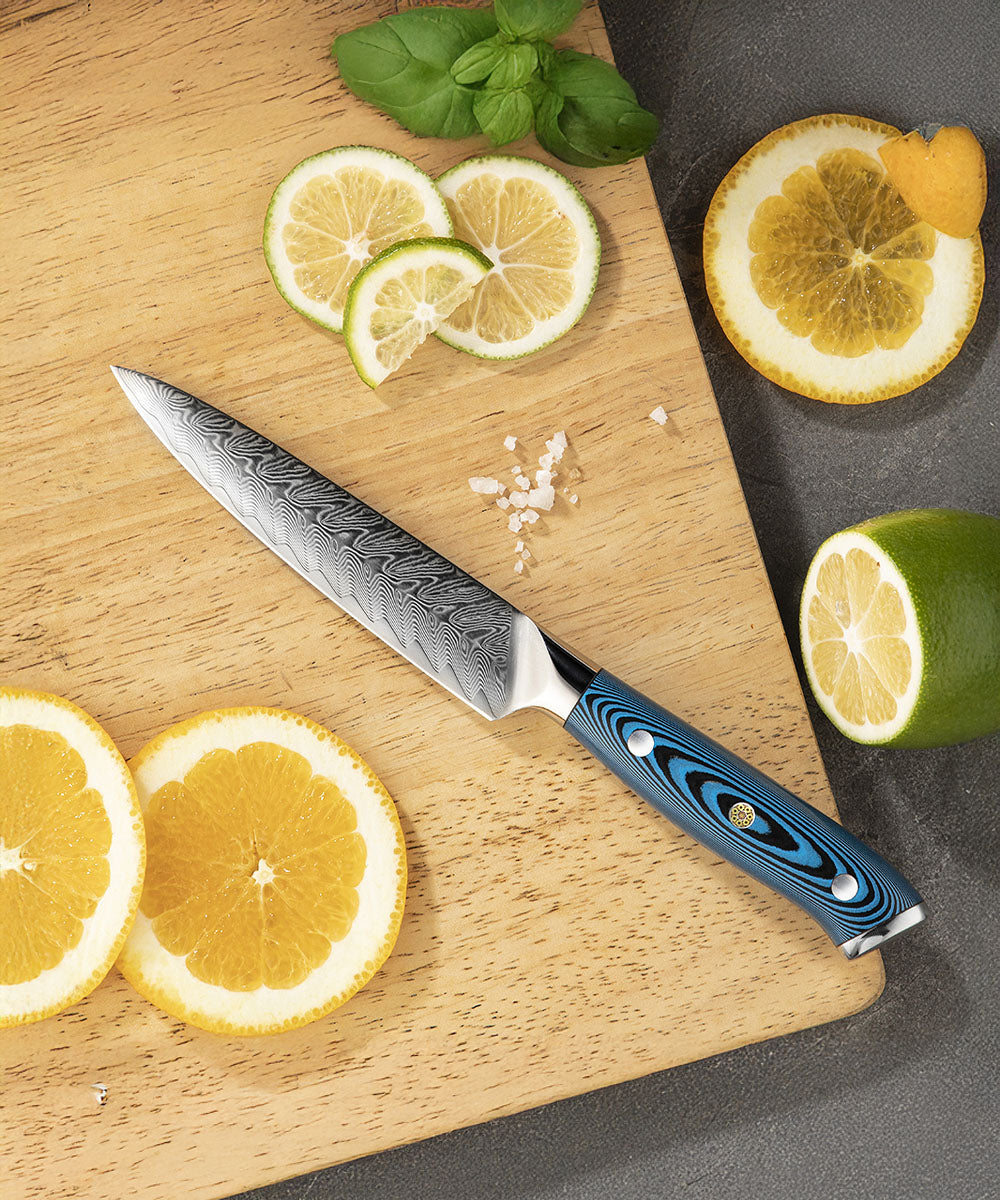
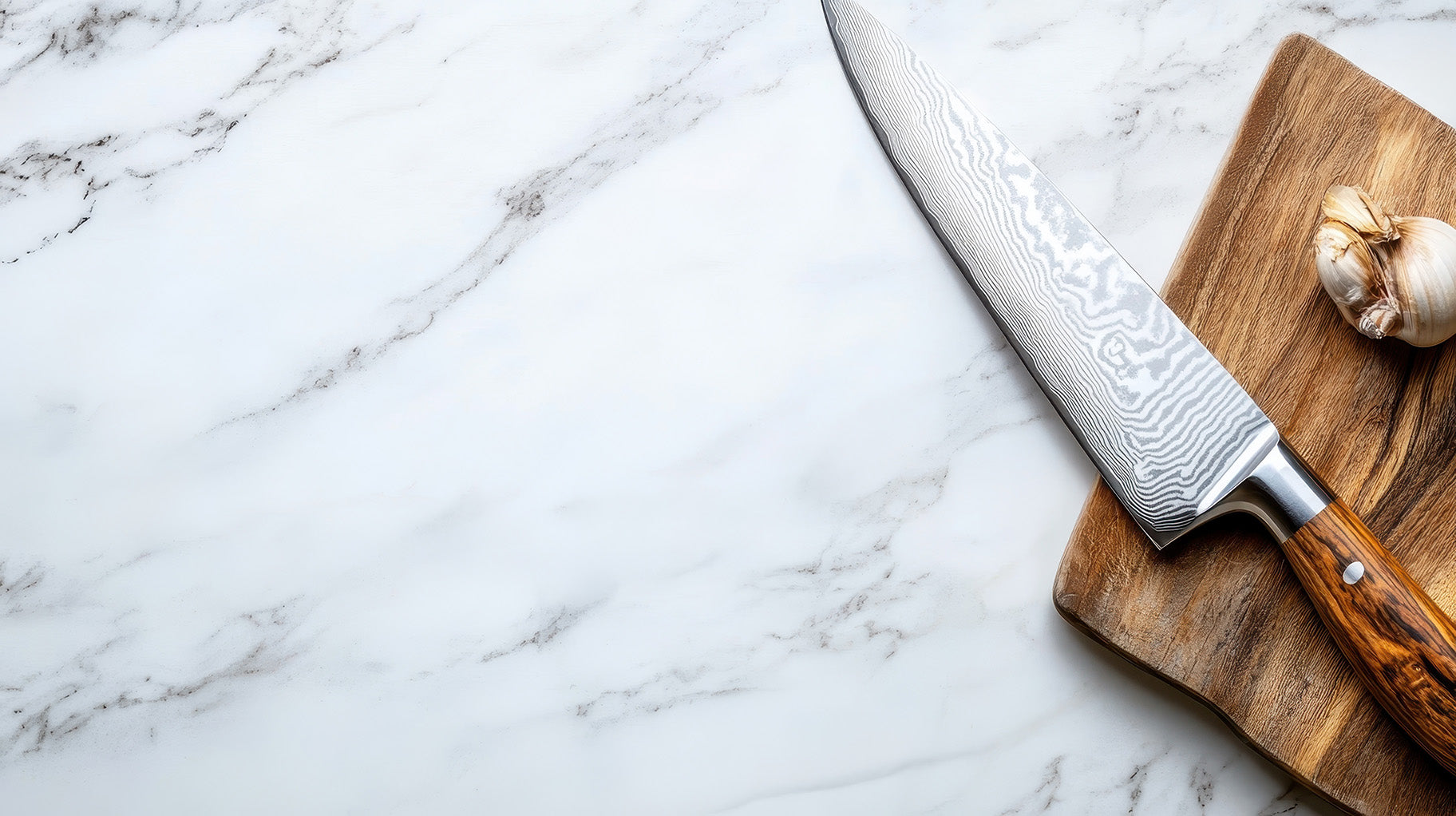
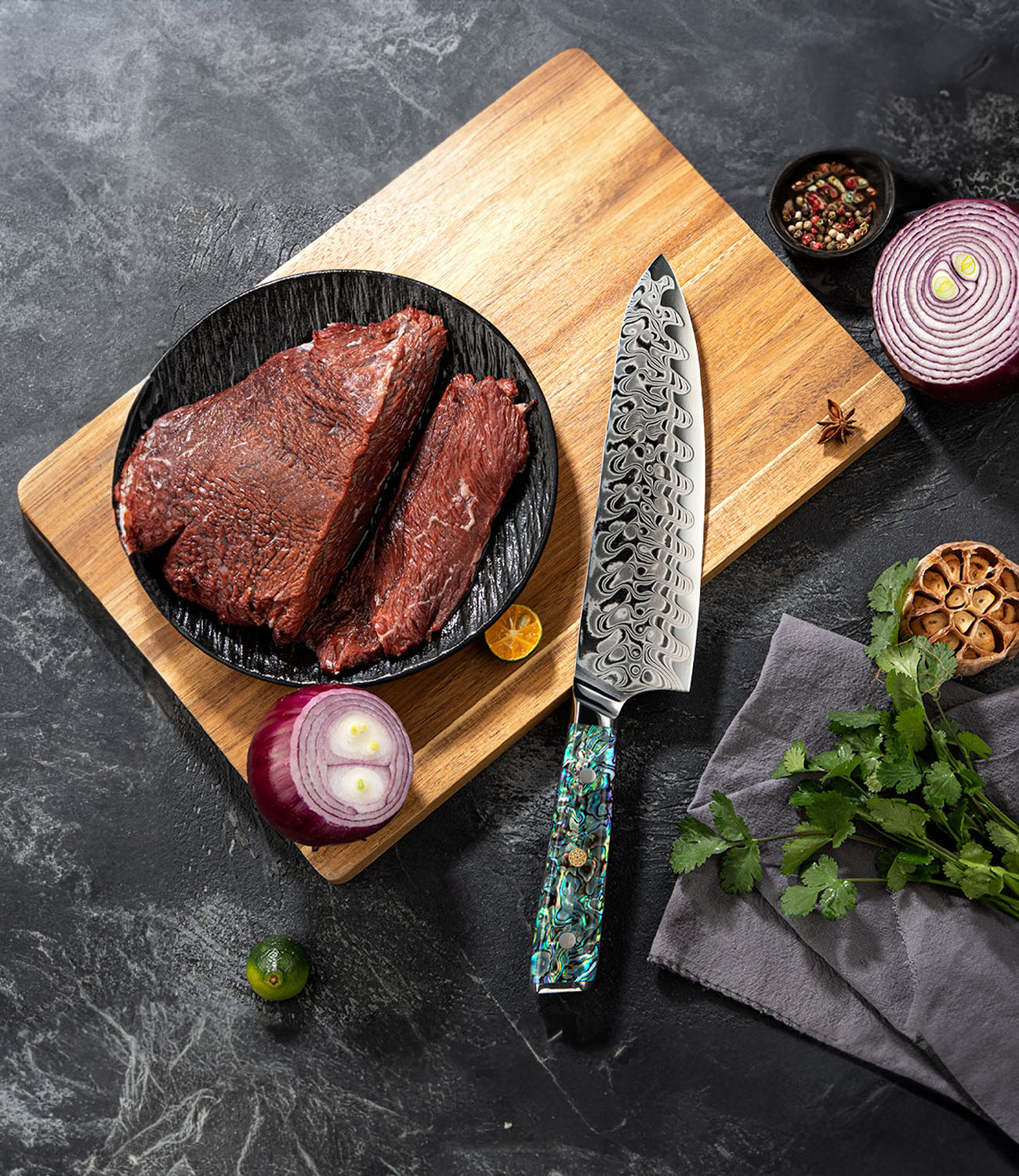
Damascus steel has captivated knife enthusiasts for centuries with its distinctive wavy patterns and legendary performance. When it comes to utility blades, Damascus steel elevates this essential kitchen tool from basic functionality to an art form that combines beauty with exceptional cutting performance.
Whether you've just purchased your first Damascus utility blade or you're looking to maximize the performance of your existing blade, this comprehensive guide will teach you everything you need to know about proper usage, safety protocols, and maintenance techniques to ensure your Damascus utility blade serves you well for years to come.
What Is a Damascus Utility Blade?
A Damascus utility blade is a mid-sized knife (typically 4-7 inches) crafted from Damascus steel—a material created by forge-welding multiple layers of different steel types together. This process creates the characteristic wavy, wood-grain pattern while producing a blade that's both incredibly sharp and remarkably durable.
Key Features of Damascus Utility Blades:
- Blade Length: 4-7 inches (ideal middle ground between paring and chef's knives)
- Steel Construction: Multiple layers (often 67+ layers) of high-carbon and stainless steel
- Edge Type: Typically straight-edged for versatile cutting
- Pattern: Unique Damascus pattern—no two blades are identical
- Hardness: Usually 58-62 HRC (Rockwell Hardness Scale)
- Purpose: All-purpose cutting tasks too large for a paring knife, too small for a chef's knife
The utility blade bridges the gap between specialized knives, making it one of the most frequently used tools in any kitchen. When crafted from Damascus steel, it becomes a premium instrument that delivers superior performance while serving as a conversation piece.
What Makes Damascus Steel Special?
Before diving into usage and care, it's important to understand what sets Damascus steel apart:
Superior Edge Retention
The layered construction of Damascus steel creates micro-serrations along the cutting edge that enhance sharpness and help the blade retain its edge longer than single-steel blades.
Enhanced Durability
The combination of hard and soft steel layers creates a blade that's both sharp and flexible, reducing the likelihood of chipping or breaking under normal use.
Natural Non-Stick Properties
The distinctive Damascus pattern creates microscopic air pockets that reduce surface tension, helping food release more easily from the blade.
Corrosion Resistance
Modern Damascus blades typically incorporate stainless steel layers, providing excellent rust resistance while maintaining the aesthetic and performance benefits of traditional Damascus construction.
Unique Aesthetics
Each Damascus blade features a one-of-a-kind pattern created during the forging process, making your utility blade a unique piece of functional art.
What Is a Utility Blade Used For?
Damascus utility blades excel at tasks that fall between the capabilities of paring knives and chef's knives:
Primary Uses:
1. Slicing Sandwiches and Wraps
- Deli sandwiches
- Club sandwiches
- Wraps and burritos
- Bagels and rolls
2. Cutting Medium-Sized Fruits and Vegetables
- Apples, pears, and stone fruits
- Bell peppers
- Cucumbers
- Zucchini and summer squash
- Small melons
3. Trimming and Preparing Proteins
- Removing fat and silver skin from meat
- Trimming chicken breasts
- Portioning fish fillets
- Slicing cooked meats
4. Cheese Preparation
- Cutting semi-hard and hard cheeses
- Slicing cheese blocks
- Preparing cheese plates
5. Precision Work
- Detailed vegetable cutting
- Garnish preparation
- Citrus supreming
- Herb stem removal
6. General Kitchen Tasks
- Opening packages (carefully)
- Cutting twine
- Scoring bread dough
- Light carving tasks
What NOT to Use Your Damascus Utility Blade For:
- Cutting through bones (use a cleaver or bone saw)
- Frozen foods (can chip the blade)
- Prying or twisting (damages the edge and tip)
- Opening cans or bottles (obvious, but worth mentioning)
- Cutting on hard surfaces (glass, ceramic, granite)
- Non-food items (cardboard, plastic packaging—use a box cutter)
How to Hold a Utility Blade Properly
Proper grip ensures control, safety, and efficiency when using your Damascus utility blade.
The Standard Grip (Most Common)
For General Cutting:
-
Wrap Your Hand Around the Handle
- Four fingers wrapped comfortably around the handle
- Thumb resting along the side of the handle
- Maintain a firm but relaxed grip
-
Position Your Index Finger
- For more control, extend your index finger along the spine of the blade
- Keep it away from the cutting edge
- This provides additional precision for detailed work
-
Keep Your Wrist Straight
- Avoid bending your wrist up or down
- Your forearm, wrist, and blade should form a relatively straight line
- This reduces fatigue and improves control
The Pinch Grip (For Maximum Control)
For Precision Work:
-
Pinch the Blade
- Use your thumb and index finger to pinch the blade just ahead of the handle
- This is similar to the chef's knife grip
- Provides maximum control for detailed cutting
-
Wrap Remaining Fingers
- Middle, ring, and pinky fingers wrap around the handle
- Maintain a secure but comfortable grip
The Guiding Hand
Your non-knife hand is equally important:
The Claw Position:
- Curl your fingertips inward, forming a claw
- Use your knuckles to guide the blade
- Keep your thumb tucked behind your fingers
- The blade should rest against your knuckles, not your fingertips
- Move your hand backward as you cut
This technique protects your fingertips while providing a stable guide for even, consistent cuts.
How to Use a Damascus Utility Blade Safely
Safety should always be your top priority when working with any sharp blade, especially one as keen as Damascus steel.
Essential Safety Guidelines:
1. Respect the Sharpness Damascus blades are exceptionally sharp sharper than most people expect. Always handle with care and never underestimate the cutting power.
2. Cut Away From Your Body Always direct the blade away from yourself and others. Never draw the knife toward your body or across your hand.
3. Use Proper Cutting Surfaces
- Best: End-grain wooden cutting boards
- Good: Edge-grain wood, bamboo, or quality plastic boards
- Never: Glass, ceramic, marble, granite, or metal surfaces
4. Maintain Focus Distractions while cutting are dangerous. Give your full attention to the task, especially when working with sharp Damascus blades.
5. Keep Your Workspace Clear
- Remove clutter from your cutting area
- Wipe up spills immediately (wet surfaces are slippery)
- Ensure adequate lighting
- Keep children and pets away from the work area
6. Never Try to Catch a Falling Knife If your knife falls, step back and let it drop. A falling knife has no handle—trying to catch it will result in injury.
7. Store Safely When Not in Use Never leave your Damascus utility blade loose on the counter or in a sink full of water where it could be hidden and cause injury.
8. Hand Off Properly When passing your knife to someone else:
- Lay it on the counter for them to pick up, or
- Hold it by the spine (dull edge) with the handle toward them
9. Keep It Sharp Counterintuitively, sharp knives are safer than dull ones. Dull blades require more pressure and are more likely to slip.
10. Use the Right Knife for the Job Don't force your utility blade to do tasks it's not designed for. This can damage the blade and cause accidents.
Proper Cutting Techniques for Damascus Utility Blades
Mastering these techniques will improve your efficiency and help protect your blade.
1. The Slicing Motion
Best for: Sandwiches, soft fruits, cheese
Technique:
- Position the blade at a slight angle
- Draw the knife through the food in a smooth, continuous motion
- Use the entire length of the blade, not just the middle
- Apply gentle downward pressure
- Let the sharpness of the Damascus edge do the work
Tip: For tomatoes and other delicate items, use a light sawing motion to penetrate the skin without crushing.
2. The Straight Cut
Best for: Vegetables, trimming proteins
Technique:
- Position the blade perpendicular to the food
- Press straight down with controlled force
- Keep the blade level for uniform cuts
- Use your guiding hand to stabilize the food
Tip: For harder vegetables, use a slight rocking motion at the beginning of the cut to initiate penetration.
3. The Rock Cut
Best for: Herbs, small vegetables
Technique:
- Keep the tip of the blade on the cutting board
- Use the tip as a pivot point
- Rock the blade up and down
- Move slightly forward with each rock
- Guide ingredients under the blade with your other hand
4. The Precision Trim
Best for: Removing fat, peeling fruits
Technique:
- Hold the item in your guiding hand
- Use short, controlled strokes
- Keep the blade at a shallow angle
- Work away from your fingers
- Take your time—precision is more important than speed
5. The Score and Snap (For Garnishes)
Best for: Citrus twists, decorative cuts
Technique:
- Make shallow cuts without going all the way through
- Create patterns or designs as desired
- Use the tip of the blade for detailed work
- Maintain light pressure to avoid over-cutting
How to Care for a Damascus Utility Blade
Proper care ensures your Damascus blade maintains its beauty and performance for decades.
Daily Care and Cleaning
Immediately After Each Use:
-
Rinse Under Warm Water
- Remove food particles immediately
- Don't let acidic foods (tomatoes, citrus) sit on the blade
-
Hand Wash with Mild Soap
- Use a soft sponge or cloth
- Wash the blade, not your hand holding the sponge
- Never scrub aggressively—Damascus steel doesn't need it
-
Dry Thoroughly
- Use a soft, clean towel
- Dry immediately after washing
- Pay special attention to the handle junction
- Moisture is the enemy of all knives, especially Damascus
-
Wipe Down Completely
- Even after drying with a towel, wipe again
- Ensure no water droplets remain
- Check the handle and any crevices
Critical Care Rules:
NEVER put Damascus blades in the dishwasher
- Harsh detergents damage the Damascus pattern
- High heat can warp the blade and damage the handle
- Jostling against other items can chip the edge
- The dishwasher is the #1 enemy of Damascus steel
NEVER leave to air dry
- Even stainless Damascus can develop water spots
- Minerals in water can cause discoloration
- Always towel dry immediately
NEVER soak in water
- Extended water exposure damages both blade and handle
- Can cause rust spots even on stainless Damascus
- Loosens handle attachments over time
Weekly Maintenance
For Regular Users (3+ times per week):
-
Oil the Blade
- Apply a thin layer of food-safe mineral oil or camellia oil
- Wipe along the entire blade surface
- This protects the Damascus pattern and prevents oxidation
- Buff with a clean cloth to remove excess
-
Inspect the Edge
- Check for any chips or damage
- Test sharpness on a tomato or paper
- Address any issues before they worsen
-
Check the Handle
- Ensure it's secure and tight
- If wooden handle, check for cracks or dryness
- Apply handle oil if needed (mineral oil or specialized handle oil)
Monthly Deep Cleaning
Once Per Month or as Needed:
-
Deep Clean the Blade
- Mix baking soda with a small amount of water to form a paste
- Gently rub along the blade to remove any buildup or discoloration
- Rinse thoroughly and dry completely
- This is especially important after cutting acidic foods
-
Polish the Damascus Pattern
- Use a specialized knife polish or very fine metal polish
- Apply with a soft cloth in circular motions
- Buff to a shine with a clean cloth
- This brings out the Damascus pattern's full beauty
-
Condition Wooden Handles
- If your blade has a wooden handle, apply food-safe wood conditioner
- This prevents cracking and maintains appearance
- Let absorb for 30 minutes, then buff off excess
How to Sharpen a Damascus Utility Blade
Damascus steel can be sharpened like any other blade, but requires careful attention to maintain the edge geometry and Damascus pattern.
When to Sharpen
Signs Your Blade Needs Sharpening:
- Struggles to cut through tomato skin
- Requires more pressure than usual
- Doesn't slice paper cleanly
- Feels like it's dragging rather than cutting
Frequency:
- Light home use: Every 6-12 months
- Regular home use: Every 3-6 months
- Professional or heavy use: Every 1-3 months
Important: Hone regularly with a steel or strop between sharpenings to maintain the edge.
Sharpening Methods for Damascus Utility Blades
Method 1: Whetstone Sharpening (Recommended)
Whetstones provide the most control and best results for Damascus blades.
What You'll Need:
- Combination whetstone (1000/6000 grit)
- Water
- Towel
- Angle guide (optional, helpful for beginners)
Step-by-Step Process:
-
Soak the Stone
- Submerge in water for 10-15 minutes
- Place on a damp towel to prevent slipping
-
Determine the Angle
- Most utility blades: 15-20 degrees
- Damascus blades often have thinner edges: 12-15 degrees
- Check manufacturer specifications if available
- When in doubt, use 15 degrees
-
Start with Coarse Grit (1000)
- Place the blade at the proper angle
- Start at the heel of the blade
- Push away from you or draw toward you (choose one method and stay consistent)
- Maintain consistent pressure and angle
- Move along the entire edge from heel to tip
- Repeat 10-15 times
-
Check for Burr Formation
- After several passes, run your finger perpendicular across the edge (carefully)
- Feel for a slight rough edge (burr) on the opposite side
- This indicates you've created a new edge
-
Sharpen the Other Side
- Flip the blade and repeat
- Same angle, same motion, same number of passes
- Work until you feel the burr on the first side
-
Refine with Fine Grit (6000)
- Switch to the fine grit side
- Repeat the process with lighter pressure
- 5-8 passes per side
- This polishes the edge and removes the burr
-
Strop the Edge
- Use a leather strop or newspaper
- Draw the blade across (spine first, away from the cutting edge)
- This removes any remaining burr and polishes the edge
- 5-10 passes per side
-
Clean and Test
- Wash the blade to remove metal particles
- Dry thoroughly
- Test on tomato or paper
Pro Tips for Damascus:
- Use light pressure to avoid over-grinding and preserving the Damascus pattern
- Keep the blade wet during sharpening to prevent heat buildup
- Work slowly and deliberately—Damascus steel deserves patience
Method 2: Honing Steel (Maintenance)
This doesn't remove metal but realigns the edge:
Process:
- Hold the honing steel vertically
- Place the blade at a 15-20 degree angle
- Draw the blade down and across the steel
- Alternate sides
- 5-8 strokes per side
- Do this before or after each use
Method 3: Professional Sharpening
For Damascus blades, professional sharpening is often worth the investment:
When to Choose Professional:
- You're uncomfortable sharpening yourself
- The blade is very dull or damaged
- You want to maintain optimal edge geometry
- Special occasion blade that deserves expert care
Cost: Typically $10-20 per blade Frequency: 1-2 times per year for most home users
What NOT to Do When Sharpening Damascus
Don't use electric sharpeners (unless specifically designed for Damascus)
- Can overheat the blade
- Often removes too much material
- May damage the Damascus pattern
Don't use pull-through sharpeners on quality Damascus
- Creates uneven edge geometry
- Can damage the fine Damascus edge
- Removes more material than necessary
Don't sharpen on dry stones
- Always use water or oil as recommended
- Dry sharpening creates heat that can damage Damascus steel
Don't sharpen at inconsistent angles
- Ruins the edge geometry
- Creates a weaker edge
- Damages cutting performance
How to Prevent Damascus Blade Rust
Even stainless Damascus steel requires proper care to prevent oxidation and maintain its appearance.
Daily Prevention:
-
Dry Immediately After Washing
- Most important step in rust prevention
- Use a clean, dry towel
- Don't leave any moisture
-
Avoid Acidic Foods Sitting on the Blade
- Citrus, tomatoes, and vinegar can cause discoloration
- Rinse immediately after cutting these items
-
Store in a Dry Environment
- Avoid humid storage areas
- Use proper knife storage (block, strip, or guard)
- Never store in a damp drawer
Regular Protection:
-
Apply Blade Oil
- Food-safe mineral oil, camellia oil, or specialized knife oil
- Thin layer applied with a soft cloth
- Especially important if you live in humid climates
-
Check for Early Signs
- Look for discoloration or spotting
- Address immediately if spotted
- Early intervention prevents permanent damage
If Rust Appears:
For Light Surface Rust:
- Make a paste of baking soda and water
- Gently rub the affected area with a soft cloth
- Rinse thoroughly and dry completely
- Apply oil for protection
For Stubborn Rust:
- Use a rust eraser (available at kitchen supply stores)
- Gently work the affected area
- Follow up with baking soda paste if needed
- Rinse, dry, and oil
For Extensive Rust:
- Consult a professional knife restoration service
- Don't attempt aggressive cleaning yourself
- Prevention is always better than cure
How to Store a Damascus Utility Blade
Proper storage protects your investment and prevents damage.
Best Storage Methods:
1. Magnetic Knife Strip (Highly Recommended)
- Keeps blade safely displayed
- Easy access for daily use
- Protects edge from contact damage
- Shows off the beautiful Damascus pattern
- Installation tip: Mount away from stove to avoid heat exposure
2. Knife Block
- Traditional and convenient
- Protects blade from damage
- Keep slots clean to avoid bacteria
- Choose blocks with horizontal slots (easier on edges)
3. In-Drawer Knife Organizer
- Keeps knives organized and protected
- Saves counter space
- Must be specifically designed for knife storage
- Prevents blades from touching each other
4. Individual Blade Guard
- Inexpensive protection
- Allows for drawer storage
- Protects edge and prevents accidents
- Good for travel or occasional use
5. Knife Roll
- Best for transporting knives
- Professional appearance
- Not ideal for daily home storage
- Good for protecting during moves or when traveling
Storage Location Considerations:
DO:
- Store in dry, cool location
- Keep away from heat sources (stove, oven)
- Ensure proper ventilation
- Store clean and completely dry
- Keep out of reach of children
DON'T:
- Store loose in a drawer (damages edge and is dangerous)
- Keep near the sink (moisture exposure)
- Store in humid areas
- Leave exposed to direct sunlight (can damage handles)
- Store while still damp or dirty
Damascus Steel vs. Regular Steel: What's the Difference?
Understanding the advantages helps you appreciate your investment:
Performance Differences:
Damascus Steel:
- Superior edge retention (stays sharp longer)
- Enhanced cutting performance due to layered structure
- Natural non-stick properties from pattern
- More flexible yet strong
- Typically sharper out of the box
Regular Steel:
- Good performance but requires more frequent sharpening
- Simpler maintenance for some
- More affordable
- Widely available
- Suitable for beginners
Aesthetic Differences:
Damascus Steel:
- Unique, artistic patterns
- No two blades identical
- Premium appearance
- Conversation starter
- Heirloom quality
Regular Steel:
- Plain, uniform appearance
- Functional but basic
- Less visually distinctive
Maintenance Differences:
Damascus Steel:
- Requires hand washing only
- Benefits from regular oiling
- Needs careful sharpening to preserve pattern
- More valuable, deserves extra care
Regular Steel:
- Generally more forgiving
- Some are dishwasher safe (though not recommended)
- Easier to sharpen carelessly without concern
- Less investment to protect
Are Damascus Utility Blades Worth It?
This is a common question when considering the premium price point.
Damascus Blades Are Worth It If You:
Appreciate craftsmanship and artistry
- Each blade is a unique work of functional art
- The Damascus pattern is visually stunning
- You enjoy owning beautiful, well-made tools
Want superior performance
- Exceptional sharpness and edge retention
- Better cutting experience than standard blades
- Professional-quality results
Plan to maintain it properly
- You're willing to hand wash and care for it
- You understand it's an investment requiring care
- You'll use it regularly and appropriately
Value longevity
- Quality Damascus blades last generations with proper care
- Heirloom quality that can be passed down
- Better value over time despite higher initial cost
Consider Alternatives If You:
Want low-maintenance convenience
- Prefer dishwasher-safe tools
- Don't want to worry about special care
- Need an everyday beater knife
Are rough on your tools
- Tend to use knives for non-food purposes
- Don't maintain knives regularly
- Frequently chip or damage blades
Have a very limited budget
- Need to outfit an entire kitchen
- Can't afford the premium price
- Would rather have multiple basic knives
Bottom Line: Damascus utility blades are premium tools that deliver superior performance and aesthetics. If you appreciate quality craftsmanship and are willing to provide proper care, they're absolutely worth the investment.
Common Mistakes to Avoid with Damascus Utility Blades
Learn from others' errors to protect your investment:
Mistake #1: Putting It in the Dishwasher
Why it's bad: Destroys the Damascus pattern, damages the handle, dulls the edge Solution: Always hand wash immediately after use
Mistake #2: Leaving It Wet
Why it's bad: Causes rust, water spots, and handle damage Solution: Dry thoroughly immediately after washing
Mistake #3: Using on Hard Surfaces
Why it's bad: Dulls the blade, can chip the edge Solution: Only use on wood, bamboo, or quality plastic cutting boards
Mistake #4: Storing Improperly
Why it's bad: Damages the edge, creates safety hazards Solution: Use a magnetic strip, knife block, or blade guard
Mistake #5: Using for Wrong Tasks
Why it's bad: Can damage or break the blade Solution: Use appropriate tools for bones, frozen foods, or non-food items
Mistake #6: Neglecting Regular Maintenance
Why it's bad: Blade dulls prematurely, Damascus pattern fades Solution: Oil regularly, hone between uses, sharpen as needed
Mistake #7: Sharpening Incorrectly
Why it's bad: Ruins edge geometry, damages Damascus pattern Solution: Learn proper technique or use professional services
Mistake #8: Letting Others Use It
Why it's bad: Others may not understand proper care and usage Solution: Keep your Damascus blade for personal use or educate others first
Mistake #9: Cutting Acidic Foods and Not Rinsing
Why it's bad: Can cause discoloration and etching Solution: Rinse immediately after cutting citrus, tomatoes, or vinegar-based items
Mistake #10: Buying Low-Quality "Damascus"
Why it's bad: Some cheap "Damascus" is just pattern etched, not true layered steel Solution: Buy from reputable manufacturers like Fyn Damascus Knives
Professional Tips for Maximum Damascus Blade Performance
Tip #1: Rotate Your Knives
Don't use the same blade for everything. This extends its life and maintains optimal performance.
Tip #2: Cut with the Grain
When possible, cut in the direction of the food's natural grain for cleaner cuts and less resistance.
Tip #3: Let the Blade Do the Work
Don't force cuts. A sharp Damascus blade should glide through food with minimal pressure.
Tip #4: Keep a Honing Steel Nearby
A few quick passes before use realigns the edge and maintains peak performance.
Tip #5: Create a Maintenance Schedule
Set reminders for weekly oiling, monthly deep cleaning, and annual professional sharpening.
Tip #6: Use the Right Cutting Motion
Match your cutting technique to the task—slicing for soft items, rocking for herbs, straight cuts for vegetables.
Tip #7: Warm Up Cold Blades
If stored in a cool area, let the blade come to room temperature before use to prevent condensation.
Tip #8: Keep Your Cutting Board Clean
A clean surface prevents flavor transfer and protects both food and blade from contamination.
Tip #9: Respect the Tip
The tip is the most delicate part. Use it carefully and avoid dropping or hitting it.
Tip #10: Appreciate Your Tool
Damascus blades respond well to care and respect. Treat yours as the premium instrument it is.
Frequently Asked Questions (FAQs)
What is a Damascus utility blade?
A Damascus utility blade is a mid-sized kitchen knife (typically 4-7 inches) crafted from Damascus steel, which is created by forge-welding multiple layers of different steel types together. This creates a distinctive wavy pattern while producing a blade that's exceptionally sharp, durable, and retains its edge longer than standard steel blades.
What is a utility blade used for?
A utility blade is used for tasks that fall between a paring knife and chef's knife, including slicing sandwiches, cutting medium-sized fruits and vegetables, trimming proteins, preparing cheese, and general kitchen prep work. It's ideal for foods too large for a paring knife but too small for a chef's knife.
How to use a utility blade safely?
Always cut away from your body, use proper cutting surfaces (wood or quality plastic), maintain focus while cutting, keep the blade sharp, use the claw grip with your guiding hand, never try to catch a falling knife, and store safely when not in use. A sharp Damascus blade deserves extra respect.
How to hold a utility blade properly?
Use the standard grip with four fingers wrapped around the handle and thumb along the side, or use the pinch grip (thumb and index finger pinching the blade just ahead of the handle) for more control. Your guiding hand should be in a claw position with fingertips curled under and knuckles guiding the blade.
What are Damascus utility blades good for?
Damascus utility blades excel at slicing sandwiches and wraps, cutting medium-sized produce, trimming and preparing proteins, cheese preparation, precision garnish work, and general kitchen tasks. They offer superior edge retention, exceptional sharpness, and unique aesthetics compared to standard utility blades.
How to care for a Damascus utility blade?
Hand wash immediately after use with mild soap, dry thoroughly right away, apply food-safe oil weekly, store properly in a knife block or on a magnetic strip, sharpen every 3-12 months depending on use, and never put in the dishwasher. Regular oiling protects the Damascus pattern and prevents oxidation.
How to sharpen a Damascus utility blade?
Use a whetstone (1000/6000 grit combination) at a 12-15 degree angle. Sharpen on the coarse side until a burr forms, flip and repeat, then refine on the fine grit with lighter pressure. Alternatively, hone regularly with a steel between professional sharpenings. Avoid electric sharpeners unless specifically designed for Damascus steel.
How to clean a Damascus blade?
Rinse under warm water immediately after use, hand wash with mild soap using a soft sponge, dry thoroughly with a clean towel right away, and wipe down to ensure no moisture remains. Never leave to air dry or soak in water. For deep cleaning, use a baking soda paste monthly to remove buildup.
How to prevent Damascus blade rust?
Dry thoroughly immediately after washing, apply food-safe oil (mineral oil or camellia oil) regularly, avoid letting acidic foods sit on the blade, store in a dry environment, and check regularly for early signs of oxidation. Even stainless Damascus benefits from oiling, especially in humid climates.
How often should you sharpen a utility blade?
For light home use, sharpen every 6-12 months. For regular home use, sharpen every 3-6 months. For professional or heavy use, sharpen every 1-3 months. Hone with a steel between sharpenings to maintain the edge. A properly maintained Damascus blade will need less frequent sharpening than standard steel.
What makes Damascus steel special?
Damascus steel features multiple layers (often 67+) of different steel types forge-welded together, creating superior edge retention, enhanced durability, natural non-stick properties, excellent corrosion resistance, and a unique wavy pattern that makes each blade one-of-a-kind. The layered construction provides both hardness and flexibility.
How to store a Damascus utility blade?
Store on a magnetic knife strip (best option), in a knife block with horizontal slots, in a specialized in-drawer knife organizer, or with an individual blade guard. Always store clean and completely dry in a cool, dry location away from heat sources and moisture. Never store loose in a drawer.
Can Damascus utility blades rust?
Yes, even stainless Damascus can rust if not properly cared for. However, rust is easily prevented by drying thoroughly after washing, applying food-safe oil regularly, avoiding prolonged exposure to moisture or acidic foods, and storing in a dry environment. Proper care makes rust highly unlikely.
How long do Damascus utility blades last?
With proper care, a quality Damascus utility blade can last multiple generations. The superior edge retention means it needs less frequent sharpening, and the durable construction resists damage. Many Damascus blades become family heirlooms, lasting 50+ years or more with appropriate maintenance.
What's the difference between Damascus and regular utility blades?
Damascus blades feature layered steel construction creating superior edge retention, better durability, natural non-stick properties, and unique aesthetic patterns. Regular blades are simpler, more affordable, require more frequent sharpening, and have plain appearance. Damascus offers premium performance and beauty at a higher price point.
How to oil a Damascus blade?
Apply a thin layer of food-safe mineral oil or camellia oil to the entire blade surface using a soft cloth. Wipe along the blade in smooth strokes, ensuring even coverage. Let sit for a few minutes, then buff with a clean cloth to remove excess. Do this weekly for regular users or monthly for occasional users.
Are Damascus utility blades worth it?
Yes, if you appreciate craftsmanship, want superior performance, plan to maintain it properly, and value longevity. Damascus blades offer exceptional sharpness, beautiful aesthetics, and heirloom quality. However, they require proper care and command a premium price. For those willing to invest in quality tools, they're absolutely worth it.
What cutting board is best for Damascus blades?
End-grain wooden cutting boards are best, as they're gentle on the edge and self-healing. Edge-grain wood, bamboo, and quality plastic boards are also acceptable. Never use glass, ceramic, marble, granite, or metal surfaces as these will quickly dull and potentially chip your Damascus blade's edge.
How to maintain Damascus steel pattern?
Clean gently without abrasive scrubbers, dry thoroughly after each use, apply oil regularly to protect the finish, avoid harsh chemicals and acidic foods sitting on the blade, polish monthly with specialized knife polish, and sharpen carefully to avoid excessive material removal. The pattern is permanent but can fade if neglected.
Can you put Damascus blades in the dishwasher?
Absolutely not. The dishwasher is the worst enemy of Damascus blades. Harsh detergents damage the Damascus pattern, high heat can warp the blade and damage handles, and jostling damages the edge. Always hand wash Damascus blades with mild soap and dry immediately for optimal longevity.
What steel is best for Damascus utility blades?
High-quality Damascus combines high-carbon steel (for hardness and edge retention) with stainless steel (for corrosion resistance). Look for VG-10, AUS-10, or similar core steel surrounded by layers of complementary steels. Quality Damascus typically has 60-62 HRC hardness and 67+ layers for optimal performance and aesthetics.
How to tell if Damascus steel is real?
Real Damascus steel has a pattern that continues through the entire blade thickness (visible on the spine), has depth and dimension rather than surface etching, shows variation in pattern throughout the blade, and comes from reputable manufacturers with verifiable forge processes. Cheap imitations often have uniform, printed-looking patterns.
What angle should Damascus utility blades be sharpened?
Most Damascus utility blades should be sharpened at 12-15 degrees per side for optimal performance. This is slightly more acute than Western knives (15-20 degrees) but not as extreme as some Japanese knives (10-12 degrees). Check manufacturer specifications for your specific blade, and maintain consistency.
How to remove scratches from Damascus blade?
For light scratches, use a specialized metal polish or very fine metal compound applied with a soft cloth in circular motions. For deeper scratches, use progressively finer sandpaper (1000-3000 grit) with oil, working in the direction of the Damascus pattern. For significant damage, consult a professional restoration service.
Can Damascus utility blades cut through bone?
No, utility blades are not designed for cutting through bone. This can chip or break the blade. Use a dedicated cleaver or bone saw for bone cutting tasks. Damascus utility blades are designed for boneless proteins, vegetables, fruits, and general kitchen prep—not heavy-duty butchery work.
Conclusion
Mastering your Damascus utility blade transforms it from an expensive tool into an indispensable kitchen companion. By understanding proper usage techniques, following safety protocols, and maintaining a consistent care routine, you'll enjoy decades of superior cutting performance while preserving the stunning Damascus pattern that makes your blade unique.
Key Takeaways:
- Use Properly: Master the correct grip and cutting techniques for your tasks
- Prioritize Safety: Sharp Damascus blades demand respect and careful handling
- Clean Immediately: Hand wash and dry thoroughly after every use—never use the dishwasher
- Maintain Regularly: Weekly oiling and periodic sharpening keep your blade performing optimally
- Store Correctly: Use appropriate storage to protect the edge and prevent damage
- Appreciate Quality: Damascus steel is an investment in craftsmanship that rewards proper care
Your Damascus utility blade represents centuries of metallurgical tradition combined with modern innovation. Treat it with the respect it deserves, and it will serve you faithfully for years to come—possibly becoming a treasured tool that you pass down to future generations.
Ready to experience the exceptional performance and beauty of authentic Damascus steel? Explore Fyn Damascus Knives' handcrafted collection of premium utility blades and discover the perfect combination of traditional craftsmanship, stunning aesthetics, and superior cutting performance.


Leave a comment
This site is protected by hCaptcha and the hCaptcha Privacy Policy and Terms of Service apply.