

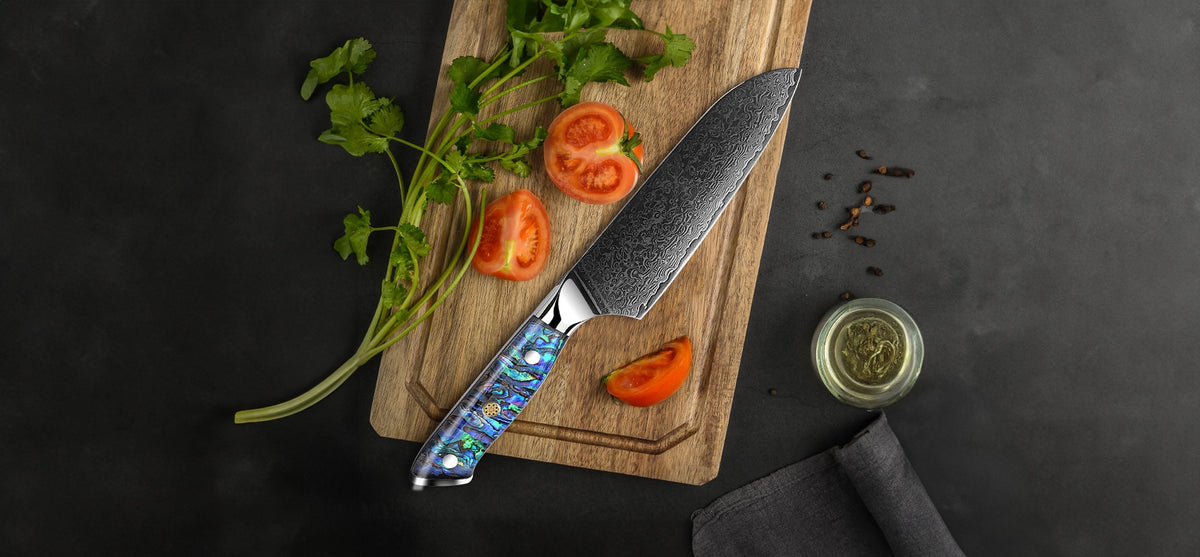
What Is a Santoku Knife Used For? Uses, Benefits & Tips

If you are upgrading your kitchen knives, you may be wondering: what is a santoku knife used for? A santoku knife is a versatile Japanese-style kitchen knife commonly used for slicing, dicing, chopping, and mincing. It is especially useful for everyday food preparation, including vegetables, fruits, fish, boneless meat, herbs, and cooked foods.
The santoku knife has become popular because it feels light, controlled, and easy to handle. Unlike a large chef’s knife, a santoku usually has a shorter blade, a flatter cutting edge, and a wide blade shape that helps with precise cuts. For home cooks, it can quickly become one of the most-used knives in the kitchen.
What Is a Santoku Knife?
A santoku knife is a Japanese multipurpose kitchen knife designed for everyday cutting tasks. The word “santoku” is often translated as “three virtues” or “three uses.” These uses are commonly understood as slicing, dicing or chopping, and mincing. Another common explanation is that it is useful for three main food groups: meat, fish, and vegetables.
A typical santoku knife has:
- A broad blade
- A flatter cutting edge
- A rounded or sheep’s foot-style tip
- A lightweight feel
- A shorter blade than many Western chef’s knives
- A design made for clean, precise downward cuts
Because of this shape, a santoku knife is excellent for controlled chopping and thin slicing.
What Is a Santoku Knife Used For in the Kitchen?

A santoku knife is used for everyday kitchen prep. It can handle many of the same tasks as a chef’s knife, but it is especially good when you want clean, accurate cuts.
The main uses of a santoku knife include:
1. Slicing vegetables
A santoku knife is excellent for slicing vegetables like cucumber, onion, carrot, capsicum, cabbage, zucchini, mushrooms, and tomatoes. Its sharp edge allows you to make thin, even slices without crushing delicate ingredients.
This makes it useful for salads, stir-fries, sandwiches, garnishes, and meal prep.
2. Chopping vegetables
Because the santoku blade usually has a flatter cutting edge, it works well for straight up-and-down chopping. This is helpful when cutting onions, celery, potatoes, herbs, and other everyday ingredients.
Instead of using a heavy rocking motion, many people use a santoku knife with a push-cut or chopping motion.
3. Dicing ingredients
A santoku knife is also useful for dicing vegetables, fruits, and cooked meats into small, even pieces. If you are preparing soups, sauces, fried rice, stews, or stir-fries, a santoku can help you cut ingredients into consistent sizes.
Even cutting matters because food cooks more evenly when the pieces are similar in size.
4. Mincing herbs and garlic
A santoku knife can be used to mince garlic, ginger, parsley, coriander, basil, spring onions, and other herbs. The wide blade gives you good control, and the sharp edge helps create fine cuts without bruising herbs too much.
For best results, use a controlled chopping motion instead of pressing too hard.
5. Cutting boneless meat
A santoku knife can cut boneless chicken, cooked steak, lamb, turkey, and other soft meats. It is useful for slicing cooked meat thinly or preparing boneless meat before cooking.
However, it is not designed for cutting through bones, frozen meat, or very hard foods. For those jobs, a cleaver or heavy-duty butcher knife is better.
6. Slicing fish
A santoku knife can be used for slicing fish fillets and seafood. Its sharp blade helps produce clean cuts, especially when working with softer fish.
However, for very delicate sashimi-style slicing, a specialist Japanese slicing knife may be better.
7. Cutting fruit
A santoku knife is useful for slicing fruits such as apples, pears, melons, mangoes, pineapples, and citrus. The broad blade gives good control, especially when cutting larger fruits into smaller portions.
8. Scooping ingredients from the cutting board
The wide blade of a santoku knife can also help scoop chopped ingredients from the cutting board into a pan or bowl. This is a small feature, but it makes cooking faster and cleaner.
Best Foods to Cut with a Santoku Knife
Here is a simple guide:
| Food Type | Is a Santoku Knife Good For It? | Notes |
|---|---|---|
| Vegetables | Yes | Great for slicing, chopping, and dicing |
| Fruits | Yes | Useful for clean, even cuts |
| Herbs | Yes | Good for mincing and fine chopping |
| Garlic and ginger | Yes | Works well with controlled chopping |
| Boneless meat | Yes | Good for slicing and trimming soft meat |
| Fish fillets | Yes | Useful for clean cuts |
| Cheese | Sometimes | Works for softer cheese, but not ideal for very hard cheese |
| Bones | No | Use a cleaver or butcher knife |
| Frozen food | No | Can damage the blade |
| Hard squash or very tough foods | Not ideal | Use a heavier knife |
Santoku Knife vs Chef’s Knife: What Is the Difference?
A santoku knife and a chef’s knife are both multipurpose kitchen knives, but they feel different in use.
| Feature | Santoku Knife | Chef’s Knife |
|---|---|---|
| Origin | Japanese-style | Western-style |
| Blade shape | Flatter edge, rounded tip | Curved edge, pointed tip |
| Cutting motion | Chopping and push-cutting | Rocking and slicing |
| Size | Usually shorter | Usually longer |
| Feel | Lightweight and controlled | Heavier and more powerful |
| Best for | Vegetables, herbs, fish, boneless meat | Larger tasks, rocking cuts, heavier prep |
If you prefer a lighter knife with more control, a santoku knife is a great choice. If you prefer a larger knife with a rocking motion, a chef’s knife may feel more natural.
Many kitchens benefit from having both.
How to Use a Santoku Knife Properly
To get the best results from a santoku knife, use the right cutting motion.
Use a push-cutting motion
Place the tip or front part of the blade near the cutting board, then push the knife forward and down through the food. This gives clean, controlled cuts.
Avoid cutting through bones
A santoku knife is sharp and precise, but it is not a bone-cutting knife. Cutting bones can chip or damage the edge.
Use a proper cutting board
Use a wooden or plastic cutting board. Avoid glass, stone, ceramic, or metal surfaces because they can dull the blade quickly.
Keep the blade sharp
A sharp santoku knife is safer and easier to control. A dull knife requires more pressure, which increases the risk of slipping.
Wash and dry by hand
To protect the blade and handle, wash your santoku knife by hand and dry it immediately. Avoid leaving it wet in the sink.
Why Do Some Santoku Knives Have Dimples on the Blade?
Some santoku knives have small hollow grooves or dimples along the blade. These are often called a Granton edge or hollow edge. The purpose is to reduce food sticking to the blade while slicing.
This can be helpful when cutting foods like potatoes, cucumbers, apples, cheese, and soft vegetables.
Who Should Use a Santoku Knife?
A santoku knife is a good choice for:
- Home cooks who want one reliable everyday knife
- People who prepare a lot of vegetables
- Cooks who prefer a lightweight knife
- Users with smaller hands
- Anyone who wants clean, precise cuts
- People who do not like the rocking motion of a chef’s knife
If most of your cooking involves vegetables, herbs, boneless meat, fish, and fruit, a santoku knife can be one of the most useful knives in your kitchen.
Is a Santoku Knife Good for Beginners?
Yes, a santoku knife is good for beginners because it is usually lightweight, balanced, and easy to control. The shorter blade can feel less intimidating than a large chef’s knife.
Beginners should focus on basic knife safety:
- Keep fingers curled back
- Use a stable cutting board
- Cut slowly at first
- Keep the knife sharp
- Never use it on bones or frozen food
Should You Buy a Santoku Knife?
You should consider buying a santoku knife if you want a versatile kitchen knife for everyday slicing, chopping, and dicing. It is especially useful if you cook with vegetables, herbs, fish, fruit, and boneless meat regularly.
A good santoku knife can replace several basic knives for daily prep work. It gives you precision, comfort, and speed without feeling too heavy.
When choosing a santoku knife, look for:
- Sharp blade steel
- Comfortable handle
- Good balance
- Strong edge retention
- Easy maintenance
- Blade size that suits your hand
- A design that feels natural when cutting
FAQs About Santoku Knives
What is a santoku knife used for?
A santoku knife is used for slicing, chopping, dicing, and mincing. It is ideal for vegetables, fruits, herbs, fish, and boneless meat.
Can a santoku knife cut meat?
Yes, a santoku knife can cut boneless meat. It is good for slicing cooked meat, trimming soft meat, and preparing chicken, beef, lamb, or turkey. It should not be used to cut bones.
Is a santoku knife better than a chef’s knife?
A santoku knife is not always better than a chef’s knife; it depends on your cutting style. A santoku is great for controlled chopping and slicing, while a chef’s knife is better for rocking cuts and larger prep tasks.
Can I use a santoku knife for vegetables?
Yes, a santoku knife is excellent for vegetables. It works well for slicing, chopping, dicing, and mincing vegetables with clean, even cuts.
Why is it called a santoku knife?
The word “santoku” is commonly translated as “three virtues” or “three uses.” This usually refers to slicing, dicing or chopping, and mincing, or to cutting meat, fish, and vegetables.
Is a santoku knife good for everyday cooking?
Yes, a santoku knife is one of the best knives for everyday cooking because it is versatile, lightweight, and easy to control.
What should you not cut with a santoku knife?
You should not use a santoku knife to cut bones, frozen food, hard shells, or very tough ingredients. These can damage the blade.
Conclusion
So, what is a santoku knife used for? A santoku knife is used for everyday kitchen tasks such as slicing vegetables, chopping herbs, dicing fruit, mincing garlic, cutting fish, and slicing boneless meat. It is a versatile Japanese-style knife designed for clean, precise, controlled cutting.
If you want one knife that can handle most daily food prep, a santoku knife is a smart choice. It is lightweight, practical, easy to use, and suitable for both beginners and experienced home cooks.




Leave a comment
This site is protected by hCaptcha and the hCaptcha Privacy Policy and Terms of Service apply.